Area and materials
Square footage matters, but flooring layers, cabinets, insulation, plaster, and contents can matter more.
Emergency response · Tacoma & Pierce County
Standing water, a burst pipe, sewage backup, or storm damage needs a fast response. This site’s public call and callback routes are not active yet; use the emergency response details and contact a qualified local restoration company directly for a current loss.
Independent provider connection. The responding company confirms its identity, availability, arrival window, scope, and pricing.
Property manager, facility team, or business?Start a commercial response requestTacoma Water Damage Help is an independent connection service, not the restoration contractor. The provider you choose is responsible for the estimate, contract, credentials, and work.
How the service worksEmergency cleanup and drying
Standing-water extraction, moisture mapping, and structural drying for active and recent losses.
View serviceWater removal and drying for foundation entry, drainage failures, sump issues, and hidden moisture.
View serviceFast cleanup after a split pipe, failed fitting, appliance line, water heater, or freeze break.
View serviceCoordinated response for managed, multifamily, office, retail, and light-industrial properties.
View serviceContainment, removal, cleaning, and drying for wastewater and drain-backup losses.
View serviceCleanup after wind-driven rain, roof entry, surface water, drainage failures, and severe weather.
View service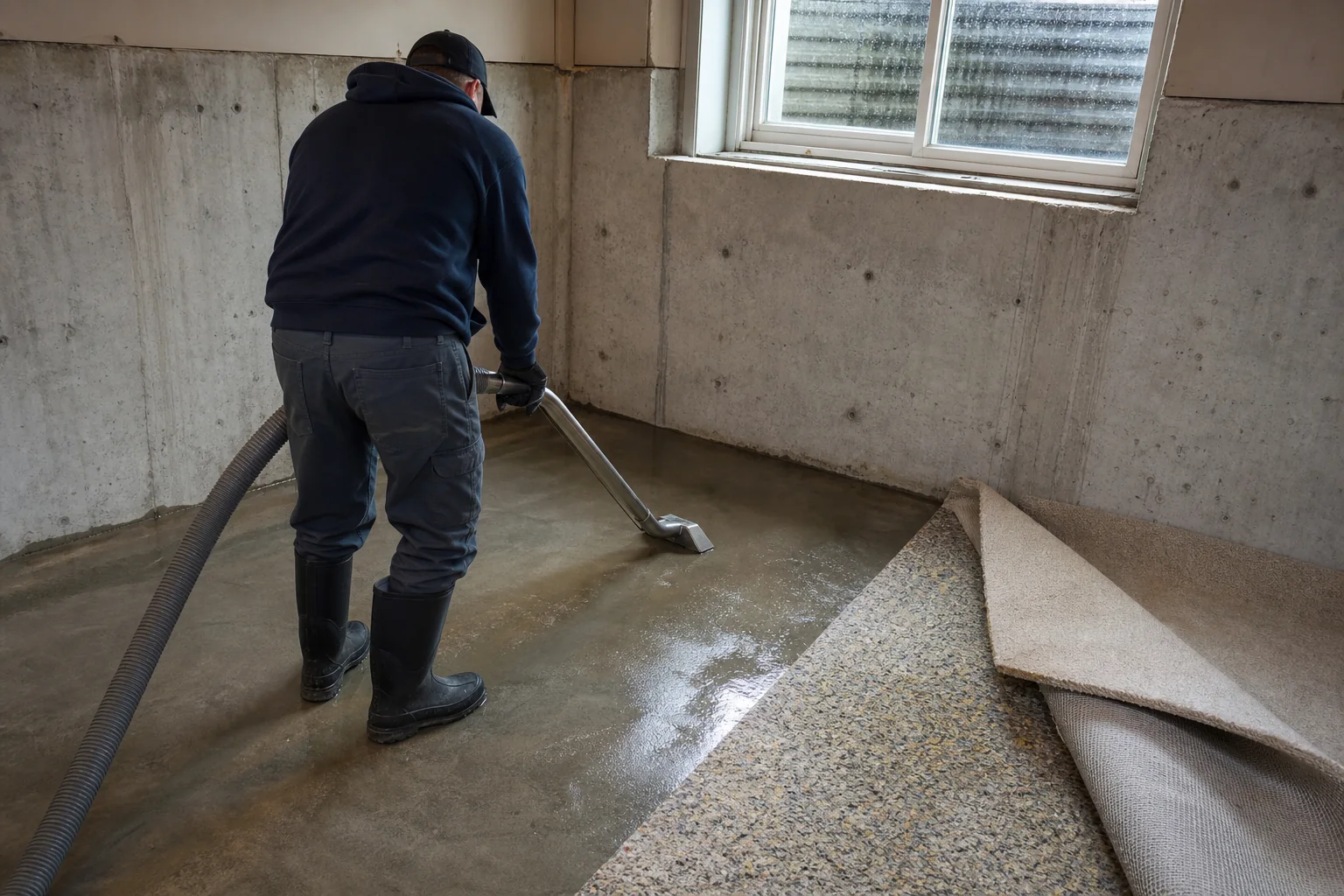
Fast response for active losses
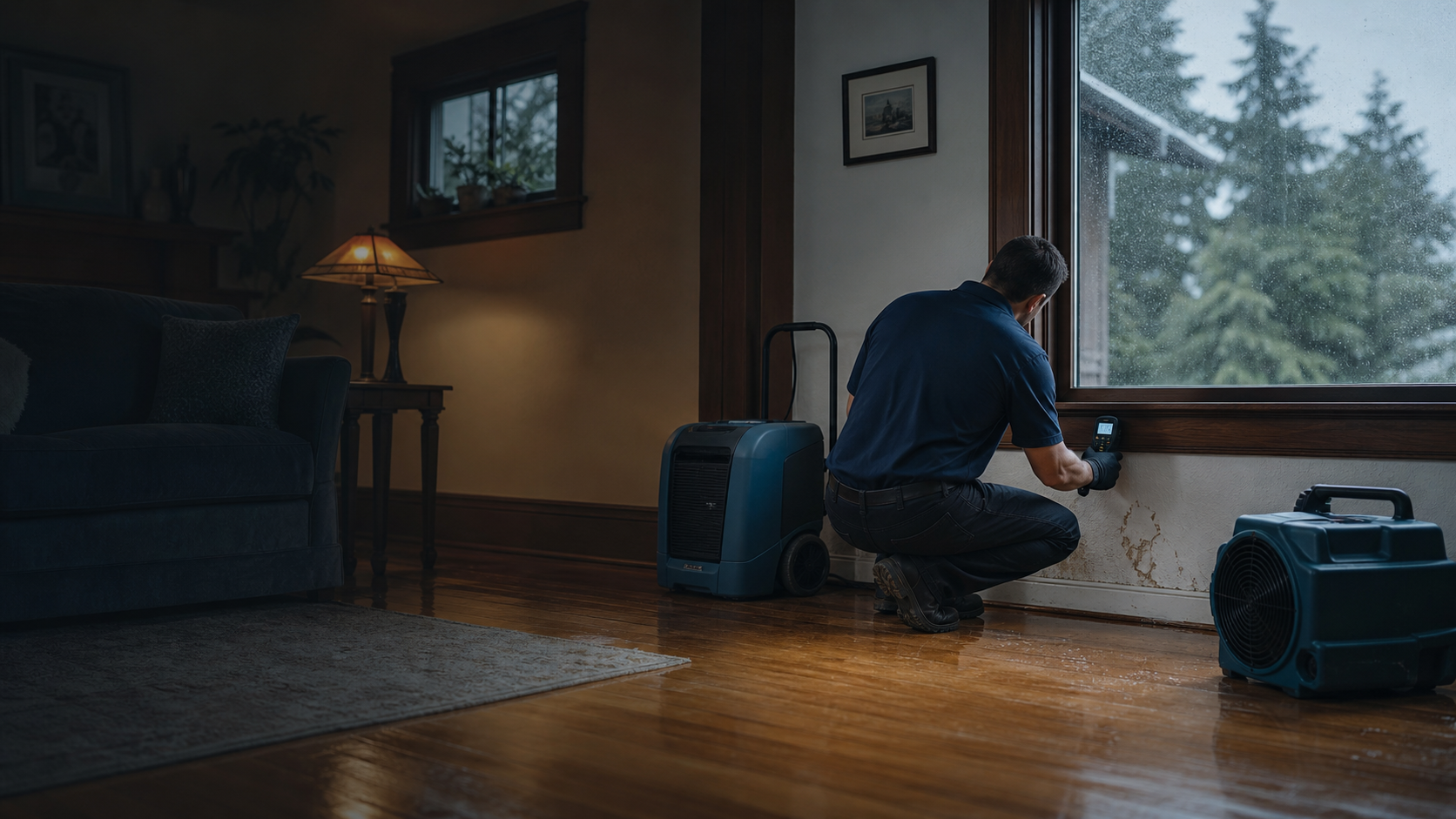
Water can move beneath flooring, behind baseboards, through wall cavities, and into the level below. An accepting provider can remove accessible standing water, identify materials that remain wet, and build a drying plan around the source and conditions on site.
Share the source, rooms or floors affected, and whether water, sewage, or an electrical concern is still active.
Bulk water is removed first. Moisture readings then help trace what the visible puddle does not show.
Air movement, dehumidification, selective removal, and repeat readings are matched to the materials and loss.
From wet to restored
Identify the water source, safety concerns, affected materials, and hidden moisture before defining the scope.
Remove standing water and address saturated materials so the drying plan can work efficiently.
Use controlled air movement and dehumidification, with moisture readings to verify progress.
Clean, repair, or replace affected finishes after the structure reaches appropriate drying goals.
Commercial fast lane
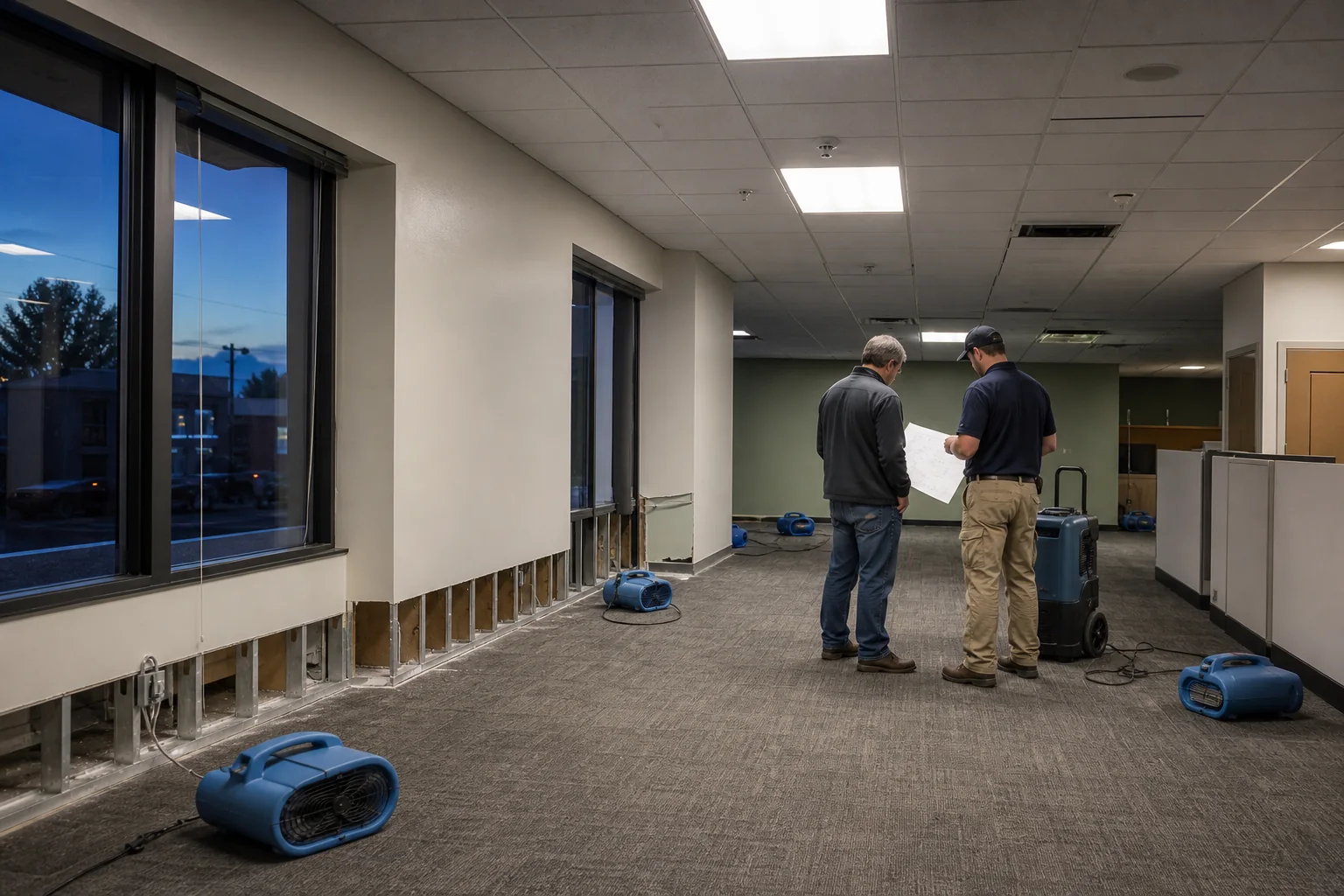
Property managers, facility teams, owners, and tenants need a response plan that protects people and keeps critical operations moving. Start with the site address, building use, affected floors, source status, and access contact.
Pricing and estimates
National consumer-guide range; not a Tacoma quote
Square footage matters, but flooring layers, cabinets, insulation, plaster, and contents can matter more.
Sewage and outdoor floodwater require stricter containment, cleaning, removal, and disposal than a recent supply leak.
Wet material behind built-ins, under floors, or inside shared walls can increase inspection and labor time.
Equipment days, monitoring, plumbing work, reconstruction, storage, and after-hours charges may be separate line items.
Get the full pricing breakdown
Read the Tacoma cost guideInsurance documentation
Cleanup and claim documentation can move at the same time. Follow your insurer’s instructions and keep a copy of everything you send.
Washington water-damage insurance guideSave the claim number, adjuster’s contact details, reported date, deductible discussed, and any deadlines.
Capture wide and close views, then note when you found the loss, stopped the source, and began cleanup.
Keep estimates, authorizations, change orders, invoices, moisture logs, and notes about materials removed.
List damaged items and save purchase records, necessary-expense receipts, emails, and a dated call log.
Tacoma and nearby cities
Tacoma is the primary market. An accepting provider confirms coverage and timing for the exact address in Pierce County or nearby South King County.
Explore all service areasClear answers
A Tacoma estimate depends on the source, area, materials, contamination, access, equipment time, and repair scope. As a national reference, current consumer cost guides place many projects around $1,383 to $6,379, while unusually small or severe losses can fall outside that range. Ask whether the written estimate covers mitigation only or also repairs, and how equipment, minimum, after-hours, and change-order charges are calculated.
Keep people out of standing water and check for electrical, gas, sewage, and ceiling hazards. Stop a plumbing source only from a dry, safe location. Photograph the loss when safe, notify your insurer, and arrange an on-site assessment if water reached walls, flooring, cabinets, or another level.
Materials, water volume, contamination, access, and humidity all matter. The EPA’s 24-to-48-hour advice is a prompt-action goal for mold prevention, not a completion time. Moisture readings should guide the finish date.
Coverage depends on the policy and cause. Washington’s insurance regulator treats sudden leaks, gradual seepage, maintenance problems, and outside flooding differently. Surface flooding may require separate coverage. Report promptly and request a written decision.
No. This is an educational and provider-connection site. The independent provider is responsible for its credentials, estimate, contract, and work. Verify the business, insurance, scope, price, and terms before authorizing service.
Water damage happening now?
The public call and callback routes for this site are not active yet. Do not wait on an unconfirmed request when water is actively damaging the property.